Case study
5–10x lower customer acquisition cost on Meta, across multiple markets
The challenge
The project was dealing with serious inefficiencies in Meta ad performance and a rising cost of acquiring new customers. Existing campaigns relied almost entirely on catalog creative and an outdated 7+1 attribution model. Campaigns were running in several international markets at once, but the accounts were fragmented and in poor shape: no consistency, no optimization and no reliable measurement.
Market and competitor mapping
I started with a detailed market analysis of the key competitors in each region. The goal was to understand how they connect ads with organic content and which creative types perform best. The markets differed, but the patterns were the same: the strongest brands built on a few specific formats, mainly short video, content that feels native, and a mix of organic and paid.

Strategic changes
After testing different attribution models (7+1, 1+0), a consolidated 7+0 setup proved the most effective, and attribution was unified across all accounts. The measurement infrastructure was rebuilt from scratch: broken data signals were fixed, the Conversions API integrations were improved, and the platforms started receiving clean, usable data.
Customer exclusion lists were cut to a minimum so they would not hold the algorithm back, which mattered given the client's strong market position. That made it possible to scale acquisition without artificial limits. The focus moved to acquiring new customers at volume and at a low cost per order (CPO), trusting Meta's optimization once it has clean, rich data to work with.
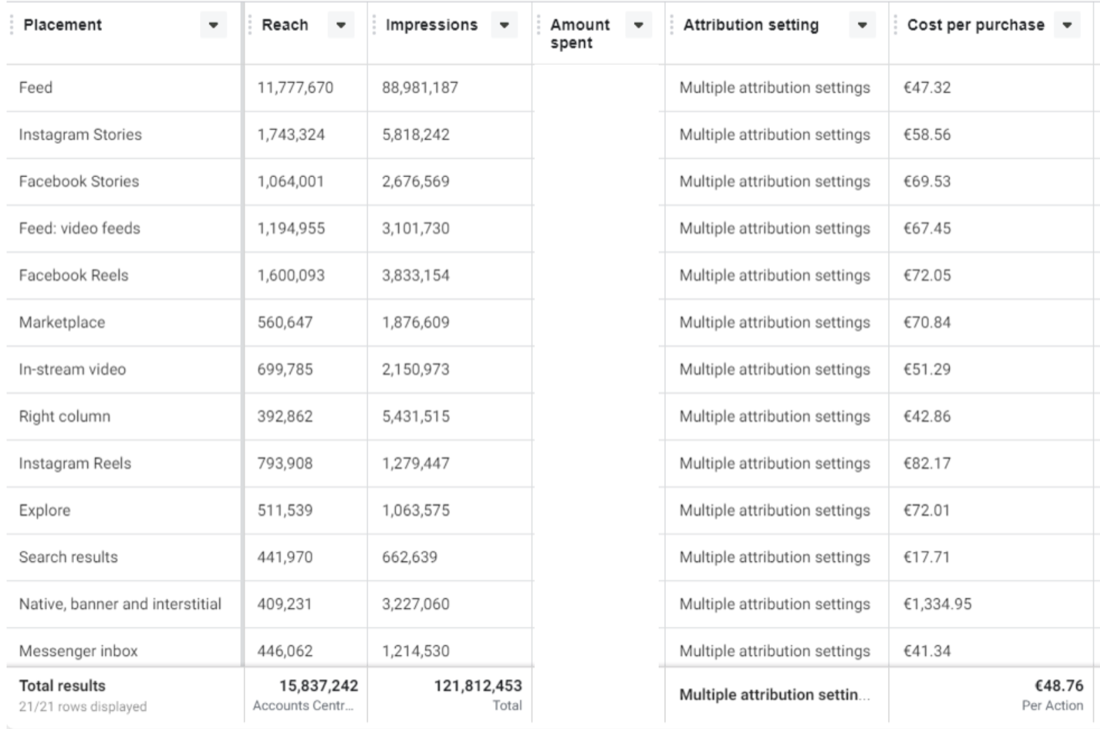
In some markets the cost per order had climbed as high as €50, a clear sign of serious problems in placement strategy and campaign structure.
Measurement and data hygiene
Every account was audited and cleaned up. Broken pixels, ineffective conversion events and gaps in data transfer were fixed, so Meta's algorithm could use every available signal for more accurate and efficient delivery.
Video ads and creative
The heavy reliance on catalog ads was replaced with a complete creative overhaul. Campaigns got meme-style entertainment content, authentic UGC videos and stylized product spots. Language and localization issues were fixed together with native speakers to raise credibility and engagement.
Variety was the key. Ads drew on the best-performing organic posts, so they felt natural and built on what the audience already liked. Formats were adapted to each placement, including missing aspect ratios and creative elements.
The whole new-customer acquisition path was reworked too. The emphasis was on dynamic hooks, clear visuals and a simple message, all to move a new audience toward a purchase as quickly as possible.

Simpler reporting across dozens of accounts
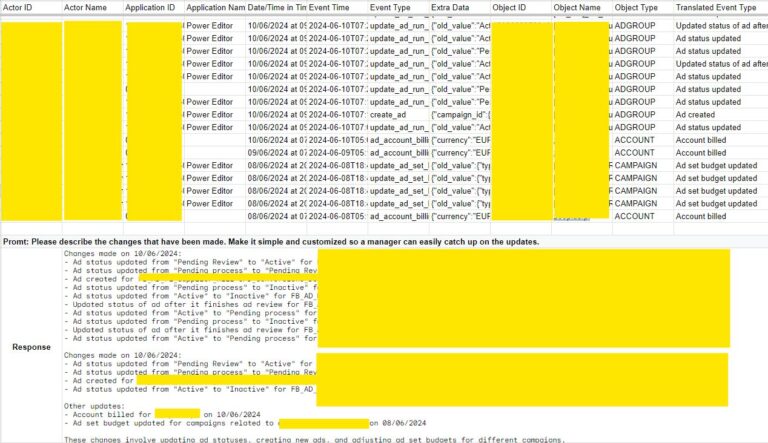
To keep track of a large number of changes across dozens of accounts, I built a custom reporting system. Using the Meta API, change data from the ad accounts was pulled automatically into Google Sheets through Google Cloud Platform. That data was then connected to OpenAI, with prompts written to produce clear, readable summaries of the updates.
“Describe the changes simply and clearly, so a manager can get oriented quickly.”
The system produced instant, human-readable summaries of activity, ideal for team leads and managers running campaigns in several countries. It scaled well, removed slow manual reporting and made the key overviews available almost immediately.
Results
The cost of acquiring a new customer dropped 5–10x, which made it possible to cut ad spend significantly without losing performance.
Thanks to the new creative strategy, the brand also gained recognition and engagement across its markets, laying the groundwork for long-term growth.